

AI & MLOps

AI Model Monitoring Explained: How to Catch Drift Before It Hurts Your Business

Your model passed QA, went live, and worked — for a while. Drift is what happens next: a silent, gradual divergence as the world changes and your model doesn't. Here's how to detect it early, before it costs you customers or revenue.

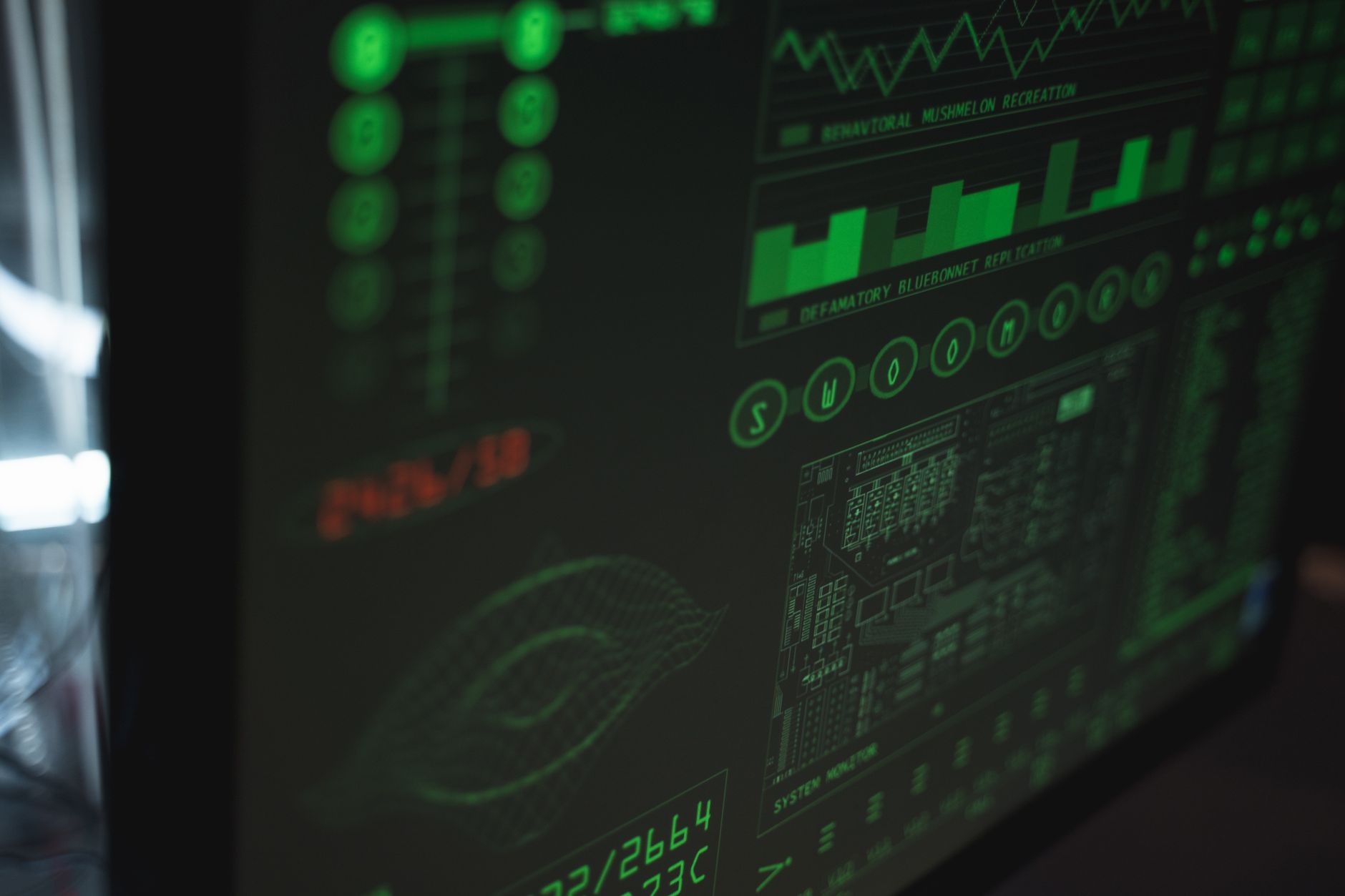
Data scientist reviewing AI model performance monitoring dashboard
The Core Problem

What Is Model Drift — and Why Does It Happen?

An AI model is trained on a snapshot of reality. The moment it goes live, that snapshot starts aging. Model drift is the gradual divergence between the patterns your model learned during training and the patterns it encounters in production.

Markets shift, customer behaviour evolves, upstream data pipelines change, and seasonal patterns rotate. None of that breaks your model on day one — but left undetected, drift silently erodes prediction quality until the damage surfaces in your business metrics. By then, you've already paid the price.

Five Types of Drift You Need to Monitor

Not all drift looks the same. Each type has a different root cause — and a different detection strategy.

Data Drift (Covariate Shift)

The statistical distribution of your input features changes. Your churn model was trained when average contract length was 12 months; now it's 24. The model doesn't know the inputs have fundamentally changed.

Concept Drift

The relationship between inputs and the correct output changes. What predicted churn in 2022 predicts loyalty in 2024. The world rewrote the rules; your model still plays by the old ones.

Label Drift

The distribution of your target variable shifts — e.g. churn rate drops from 15% to 4% industry-wide. A model calibrated to the old baseline will over-flag, flooding your team with false positives.

Prediction Drift

The model's output distribution changes even when inputs appear stable — a symptom that something upstream has silently broken. Useful as an early-warning signal before you can diagnose exactly why.

Upstream Pipeline Drift

A schema change, ETL bug, or third-party feed update sends subtly wrong data into your model. The model runs fine — it's just ingesting corrupted reality. Often the hardest type of drift to detect.

The Business Cost of Undetected Drift

Drift doesn't announce itself. These are the real-world consequences that surface before anyone realises the model is the culprit.

  • Churn predictions become unreliable — high-risk accounts get no intervention, low-risk ones get over-serviced
  • Revenue forecasts built on degraded model outputs compound errors across planning cycles
  • Recommendation engines surface irrelevant offers, quietly dragging down conversion rates
  • Compliance-sensitive models generate decisions that can't be audited or defended
  • Customer-facing AI features behave erratically, damaging trust faster than any outage
  • Engineers burn hours chasing poor KPIs without tracing the root cause to the model layer
Engineer reviewing a model monitoring dashboard with drift alerts and distribution charts
How It Works

AI Model Monitoring: Three Detection Layers

  • 1
    Statistical Monitoring Tracks input and output distributions against a validated baseline. Flags divergence using PSI, KS tests, or ADWIN — with thresholds calibrated to business impact, not raw p-values.
  • 2
    Performance Monitoring Compares predictions against ground-truth labels as they arrive. Slower to signal than statistical tests, but definitive when it does — and the clearest evidence of concept drift.
  • 3
    Infrastructure & Data Quality Monitoring Watches the pipeline itself: schema integrity, feature null rates, volume anomalies, and latency. Catches upstream pipeline drift before it ever reaches the model.

Implementing Model Monitoring: A Five-Step Process

Bolt-on monitoring rarely works. These steps embed drift detection into your MLOps lifecycle from the start.

1

Establish a Validated Baseline

Capture the full distribution of inputs, outputs, and performance metrics at the moment of deployment. This is the reference everything will be compared against — don't skip it or reconstruct it later.

2

Define Drift Thresholds and Alert Levels

Set statistical thresholds for each monitored signal. Tie alert severity to business impact, not just p-values — not every drift event warrants an on-call engineer at 2 a.m.

3

Instrument Your Prediction Pipeline

Log every prediction with its full feature vector and a timestamp. Without this, post-hoc drift analysis is impossible. Store logs in a queryable format, and treat this as non-negotiable infrastructure from day one.

4

Build a Ground-Truth Feedback Loop

Pair predictions with actual outcomes as they arrive. Even a 30-day labelling lag gives you the performance signal needed to catch concept drift before it compounds across model versions.

5

Automate Retraining Triggers

When drift exceeds your threshold, trigger a retraining pipeline automatically — or escalate for human review. Monitoring without a response playbook is just dashboarding.

What to Look for in a Model Monitoring Solution

Tooling varies widely. These are the capabilities that separate genuine monitoring platforms from glorified logging dashboards.

Multi-Metric Drift Detection

Covers data drift, concept drift, prediction drift, and data quality — not just one signal in isolation.

Model-Agnostic Compatibility

Works across frameworks — scikit-learn, XGBoost, TensorFlow, PyTorch — without requiring model rewrites.

Explainability Integration

Pairs drift alerts with feature-level explanations — so you know which input changed, not just that something did.

Real-Time and Batch Modes

Supports both streaming inference pipelines and overnight batch scoring, with detection algorithms suited to each.

Automated Retraining Hooks

Native integration with CI/CD or MLOps pipelines so a drift alert can trigger a retraining job without manual steps.

Audit-Ready Logging

Full timestamped records of predictions, drift events, and model versions — essential for regulated industries.

Customer success team reviewing churn prediction model performance on a shared screen
Real-World Example

Drift Detection in Customer Success: What It Looks Like in Practice

A SaaS company deploys a churn prediction model trained on two years of SMB customer data. For six months it performs well — CS teams action the alerts, retention improves. Then, gradually, the model starts flagging the wrong accounts.

The cause: the company had started landing enterprise contracts, which behave differently from the SMB segment the model was trained on. Data drift had been building for three months before it showed up in retention numbers.

With model monitoring in place, the distribution shift would have triggered an alert in week one of the enterprise push — and a targeted retraining would have corrected course before a single intervention was missed.


Frequently Asked Questions

Common questions about AI model monitoring and drift detection.

What is the difference between data drift and concept drift?

Data drift means your input features have changed distribution — the model sees different kinds of data than it was trained on. Concept drift means the relationship between inputs and the correct output has changed. Inputs may look normal, but the underlying rules have shifted. Both hurt performance; concept drift is harder to detect and typically more damaging.

How often should I retrain my model?

Retraining frequency should be driven by monitoring signals, not a fixed calendar. A well-instrumented pipeline tells you when retraining is needed. Some models in fast-moving domains need weekly retraining; others run stably for a year or more. Scheduled retraining without drift monitoring is both wasteful and risky.

Can I monitor a model without ground-truth labels?

Yes. Input distribution monitoring, prediction drift tracking, and data quality checks don't require labels and respond immediately. Label-based performance monitoring adds precision but has a lag that matches your labelling cycle. A strong strategy layers both — distribution monitoring as early warning, performance monitoring as confirmation.

How much does model monitoring add to infrastructure cost?

Lightweight statistical monitoring is computationally cheap — typically a few percent of inference cost at most. Full-feature logging adds storage overhead, which scales with model volume. Open-source tools like Evidently AI and WhyLabs are available at no licence cost; enterprise platforms vary. For most teams, monitoring cost is an order of magnitude lower than the cost of one undetected drift event.

Is model monitoring only relevant for large ML teams?

No — and small teams arguably need it more. A single deployed model (a churn predictor, a lead scorer, a demand forecast) can quietly degrade for months if no one is watching. Without a dedicated ML engineer reviewing dashboards daily, automated monitoring is the only reliable safety net.

Your Models Are Live. Are You Watching Them?

Most AI drift problems are invisible until they show up in your revenue, retention, or compliance audits. We help teams build monitoring pipelines that catch the signal early — so you can act before the cost is real.

Book a Free Monitoring Assessment No commitment required — a 30-minute conversation to assess your current exposure.

Leave A Comment

Categories

Archives

Tag